
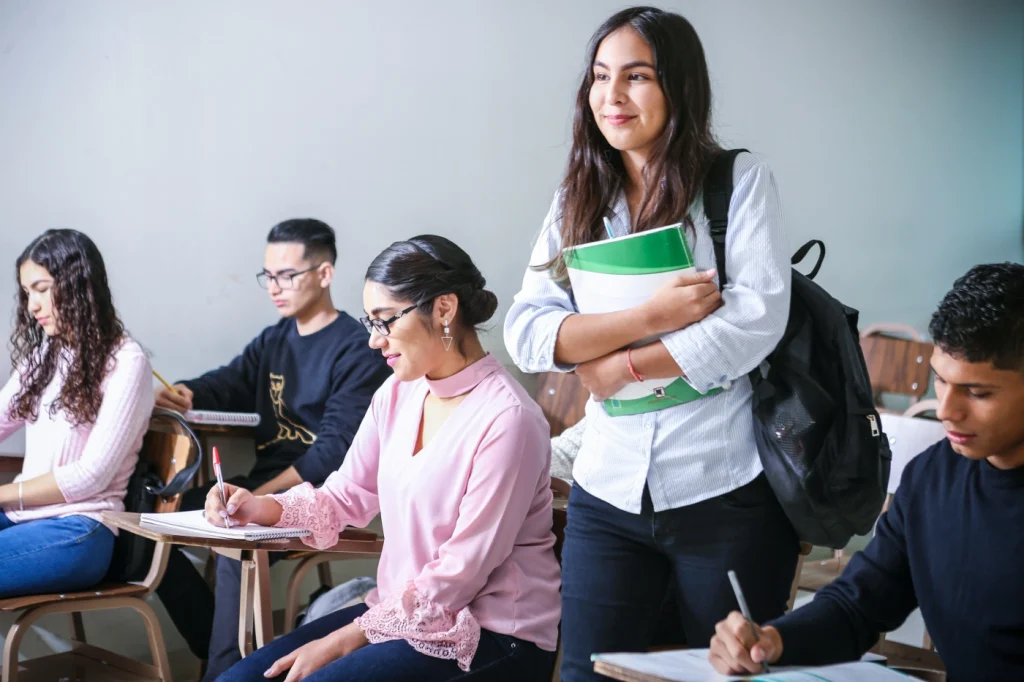
Every single day, students make dozens of decisions — some small, some significant. What to study first. Whether to ask for help. How to respond when a friend is being treated unfairly. How to manage time when three deadlines arrive in the same week.
Decision-making is one of the most used skills in a student’s life. Yet it is rarely taught directly. Most students develop their approach to decisions through trial and error — which means they often learn only after the cost of a poor choice has already been paid.
This article explores why decision-making skills matter for students, what good decision-making actually looks like, and how schools and families can help children develop this essential life skill deliberately and early.
Why Decision-Making Is a Skill, Not Just an Instinct
Many people think of decision-making as something that comes naturally — some people are just better at it than others. The reality is more encouraging. Decision-making is a cognitive skill, and like all skills, it can be taught, practised, and improved.
Researchers in cognitive psychology have identified consistent patterns in how good decision-makers think. They gather relevant information. They consider multiple options. They think through likely consequences. They manage emotional impulse. And they reflect on past decisions to improve future ones.
None of these are innate talents. They are habits — and habits can be built.
The Everyday Decisions Students Face
It is worth stepping back and recognising just how many consequential decisions students navigate on a daily basis. These fall into several broad categories:
Academic Decisions
- How to prioritise competing assignments and deadlines
- Whether to ask a teacher for help or attempt a problem independently
- How much time to allocate to revision versus new learning
- Whether to choose a subject based on interest or perceived career advantage
Social Decisions
- How to respond to conflict with a classmate or friend
- Whether to go along with peer pressure or hold their own position
- How to include others or seek inclusion in group settings
- How to use digital communication responsibly
Personal Decisions
- How to balance school, co-curricular activities, and rest
- How to respond to failure or a disappointing result
- Whether to take on a new challenge or play it safe
- How to manage money, time, and energy as they grow older
Each of these decision points is an opportunity for growth — or a moment where poor habits can take root. The difference often lies in whether the student has been equipped with a framework for thinking decisions through.
What Good Decision-Making Looks Like
Effective decision-making is not about always choosing perfectly. It is about approaching choices with a reliable process. Students who make consistently good decisions tend to do the following:
Pause Before Reacting
Good decision-makers create a gap between an impulse and an action. This might be as brief as taking a breath before responding to a difficult message, or as deliberate as sleeping on a significant choice before committing to it. The pause allows the rational brain to engage before emotion takes over.
Define the Decision Clearly
Vague problems produce vague decisions. Students who can clearly articulate what decision they are actually facing — ‘I need to choose between spending this weekend on my project or attending my friend’s event’ — are far better positioned to think it through than those who carry a fuzzy sense of stress without naming what is causing it.
Consider the Options
One of the most common decision-making failures is the assumption that only two options exist — usually the obvious choice and its opposite. Effective decision-makers ask: what else is possible? Often, a third or fourth option emerges that is better than either of the first two.
Think Through Consequences
Good decisions require thinking forward: if I choose this, what is likely to happen? This is not about anxiety or over-analysis — it is about briefly and honestly imagining the likely outcomes of each option before committing.
Reflect Afterwards
Decision-making improves through honest reflection. Students who occasionally pause and ask themselves ‘how did that decision turn out, and what would I do differently?’ build a growing library of personal experience that sharpens future choices.
How Poor Decision-Making Affects Students
When students lack strong decision-making skills, the effects show up across multiple areas of school life:
- Academic performance suffers when students cannot prioritise effectively or manage time around deadlines.
- Relationships become strained when students react impulsively in social conflicts rather than responding thoughtfully.
- Wellbeing is affected when students consistently choose short-term comfort over long-term growth.
- Confidence erodes when students feel unable to trust their own judgement.
Conversely, students who develop strong decision-making skills tend to be more resilient, more self-assured, and more capable of navigating the genuine complexity of adolescence and early adulthood.
The Role of Schools in Teaching Decision-Making
School is not just where students learn subjects. It is where they practise being people — navigating relationships, managing responsibility, and making choices under social and academic pressure. Schools that recognise this create environments where decision-making is taught, modelled, and practised.
This happens through:
- Explicit social-emotional learning (SEL) programmes that teach decision-making frameworks.
- Project-based learning where students must make real choices about how to approach and present their work.
- Student councils and leadership opportunities that give students authentic decision-making responsibility.
- Advisory or mentoring systems where trusted adults guide students through difficult choices without making decisions for them.
- A school culture that allows mistakes to be learning opportunities rather than sources of punishment or shame.
Families researching schools in Whitefield increasingly look beyond academic results to ask how a school develops its students as people. The ability to make sound, thoughtful decisions is one of the most frequently cited qualities that parents and employers alike associate with a truly educated young person.
How Parents Can Build Decision-Making Skills at Home
The family home is arguably where decision-making habits are most deeply formed. Parents who model good decision-making and deliberately involve children in age-appropriate choices raise young people who are significantly more capable of handling the bigger decisions that come later.
Practical strategies for parents:
- Give children choices from an early age — even small ones (‘Do you want to do homework before or after dinner?’) build the habit of weighing options.
- Resist the urge to solve every problem for your child. Ask ‘What do you think you should do?’ before offering your own view.
- When your child makes a poor decision, resist immediate criticism. Explore it together: ‘What happened? What were your options? What would you do differently next time?’
- Share your own decision-making process openly — explain how you are thinking through a real decision you are facing.
- Allow natural consequences to play out when stakes are low — this is how genuine learning happens.
Among best schools in Bangalore, the institutions most respected by parents are often those that partner closely with families — recognising that the habits built at home and at school must reinforce each other if they are to take lasting root.
Decision-Making and Emotional Intelligence
Strong decision-making and emotional intelligence are deeply connected. A student who cannot identify and manage their own emotions is far more likely to make impulsive, regret-laden choices. A student who lacks empathy may make decisions that damage relationships without fully understanding why.
Teaching students to pause and ask ‘How am I feeling right now, and is that affecting how I am thinking about this decision?’ is a simple but powerful habit that dramatically improves decision quality under pressure.
Schools that explicitly teach emotional vocabulary, self-awareness, and empathy are simultaneously building better decision-makers — whether they frame it that way or not.
Conclusion
Decision-making skills for students matter in everyday life because every day is made up of decisions — small and large, personal and academic, immediate and long-reaching. Students who learn to approach decisions with clarity, consideration, and reflection become more confident, more resilient, and more capable in every area of school and beyond.
This is not a skill that develops on its own. It requires deliberate teaching, modelling, and practice — at school and at home. The good news is that it is never too early or too late to start building it. A student who learns to make thoughtful decisions today is already better prepared for the complex choices that adulthood will bring.
Frequently Asked Questions
Q1. At what age should children start learning decision-making skills?
Children can begin developing basic decision-making habits as young as three or four, starting with simple choices between two options. As they grow, the complexity of decisions they practise should grow too. By primary school, children can be involved in meaningful choices about their time, friendships, and learning. By secondary school, structured frameworks like weighing consequences and considering multiple options can be explicitly taught and applied.
Q2. How is decision-making different from problem-solving?
Problem-solving is about finding a solution to a defined challenge. Decision-making is about choosing between options when the right path is not immediately clear. The two skills overlap significantly — both require clear thinking, the ability to consider alternatives, and the willingness to act under uncertainty — but decision-making specifically involves evaluating and committing to a course of action when multiple valid paths exist.
Q3. What should I do if my child always second-guesses their decisions?
Chronic second-guessing often reflects a fear of making mistakes rather than a lack of ability. Help your child build confidence by celebrating the act of deciding — not just the outcome. Discuss the difference between a bad process (not thinking the decision through) and a bad outcome (an unexpected result despite a thoughtful choice). Encouraging post-decision reflection rather than pre-decision anxiety can significantly reduce second-guessing over time.
Q4. Can decision-making skills be taught in the classroom?
Absolutely. Social-emotional learning (SEL) programmes, debate and discussion-based teaching, project-based learning, and structured reflection activities all build decision-making skills in the classroom. Teachers can also model good decision-making by thinking aloud — explaining their own reasoning when they make choices about classroom management, assignment design, or how they respond to challenges.
Q5. How do good decision-making skills affect long-term academic success?
Students with strong decision-making skills tend to manage their time more effectively, choose study strategies that actually work, navigate peer pressure more confidently, and bounce back from academic setbacks more quickly. Over a school career, these advantages compound significantly — contributing to stronger academic results, more meaningful co-curricular involvement, and better readiness for the independent demands of higher education and work.